.png?width=115&name=Untitled%20design%20(86).png)
-1-3.webp?width=115&name=Fuse-Capital-Logo-1%20(1)-1-3.webp)

Consider this illustrative composite based on typical mid-market dynamics: a well-established UK engineering design business with £15m in revenue and blue-chip international clients walks into a room.
On paper, the forward outlook looks promising. They have just signed 2 substantial contracts worth close to £4m, their technical expertise is globally recognised, and they have spent the last 12 months shedding non-core, loss-making operations to focus purely on high-margin delivery.
Look beneath the hood, however, and the picture shifts.
The bank balance sits at barely £40k. Creditors are being stretched. Because they deferred putting external funding in place 12 months earlier (convinced they could self-fund from operations and customer deposits) they now find themselves with no financial buffer just as material orders for those major contracts need to go live.
It is a story we see play out across mid-market boardrooms week after week.
When operations feel stable and the order book is growing, raising debt feels like a distraction. Founders and finance directors tell themselves, "We don’t need the capital right now. Let’s revisit this in 6 to 12 months once the new contracts start paying out."
12 months later, the business returns. The pipeline is still there, but the liquidity is gone.
By the time you actually feel the urgent need for external funding, you have already forfeited the very bargaining power required to secure it on clean terms.
The borrower’s bargaining power curve
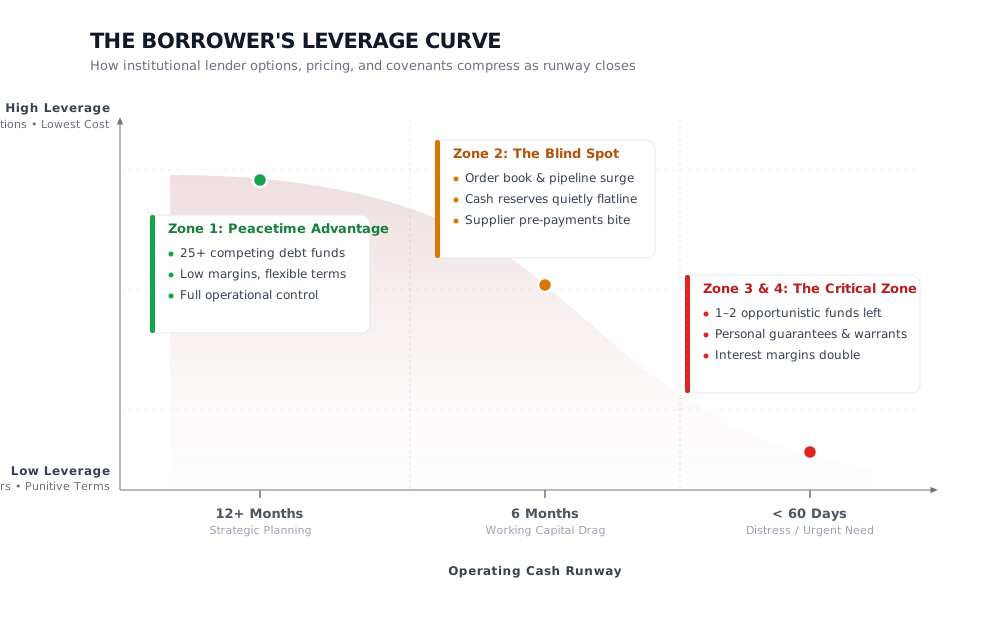
There is a fundamental truth in commercial lending: lender appetite is an inverse function of your operational urgency.
When you explore funding from a position of balance sheet strength, you operate in Zone 1: Peacetime Advantage. Your cash runway is comfortable, your suppliers are paid inside terms, and you are planning 6 to 9 months ahead of execution.
In our experience structuring mid-market facilities, operating in this zone means:
- Deep and active lender appetite: A wide pool of institutional debt funds and specialised credit lenders actively compete for the mandate.
- Highly competitive pricing margins: Pricing remains tight, and you maintain complete operational control over your business.
- Flexible forward-looking terms: Lenders are backing forward momentum, not evaluating immediate survival risk.
When capital planning is deferred, the business gradually drifts down the curve into The Critical Zone.
In our observation, the moment cash reserves drop to critical operating levels, lenders view you fundamentally differently. They stop assessing how impressive your client list is. They stop caring that you are delivering projects for household energy names or global contractors.
Instead, they look at your burn rate, your supplier ledger, and your next payroll date.
By the time cash reserves hit critical levels, that initially broad pool of potential lenders shrinks to a select few opportunistic special situations funds. Debt transforms strictly into emergency liquidity rather than growth capital. In our recent deal experience, margins widen significantly, upfront arrangement fees escalate, security locks down every company asset, and lenders start asking for equity participation, warrants, or board seats.
You end up paying significantly more for the money and giving away hard-won control, simply because the clock ran out.
The lending clock vs your bank balance
The second miscalculation comes down to time.
When you run a business, it is easy to assume that arranging debt is relatively quick: you get in touch with a funding partner, show them your accounts, have a couple of meetings, and have funds in your account a few weeks later.
In the real world of commercial funding, it almost never happens that fast.
Even when lenders are keen to back you, putting a proper facility in place involves multiple moving parts. Based on typical deal timelines:
- Financial preparation and forecasting: Putting together a clean financial picture and pipeline forecast requires dedicated time upfront.
- Market engagement and negotiations: Approaching the right lenders and securing term sheets typically takes 6 to 8 weeks.
- Due diligence and legal processing: Background checks, site visits, and finalising loan contracts add several more weeks to the final timeline.
From first conversation to cash in the bank, you are generally looking at a multi-month process.
If your cash forecast shows you running short in the near term, you are already behind schedule. When lenders realise you are up against a wall with no time left, the dynamic changes instantly. They know you have no other options, so they price the loan higher to reflect the rush and the risk.
The cash problem with winning new work
Ironically, growth is often the very thing that triggers the cash crunch.
Take a typical project-based business delivering complex, staged contracts:
- Securing the work: You win a £2m specialist contract.
- Client deposit terms: The client pays a 50% deposit upfront (£1m).
- Actual delivery costs: Your delivery costs (materials, fabrication, specialists) are 70% (£1.4m).
- Supplier payment terms: Your key suppliers insist on substantial payments upfront before they order materials or start work.
On paper, that is a great contract with a healthy £600k profit margin.
In your bank account, however, it creates an immediate £400k cash hole on day one just to buy materials and get started.
If you win 2 or 3 of these contracts at the same time, a growing £15m business can run out of cash fast.
Without a funding facility ready to bridge that gap, management has to lean on creditor stretch: stalling suppliers to 60 or 90 days, asking shareholders for emergency help, or holding back tax payments. This approach burns out leadership, strains relationships with vital suppliers, and leaves you vulnerable if a client delays a single milestone sign-off.
Raise when you do not need it
External funding is simply working capital to help you deliver what you have already sold.
Setting up a facility while your cash balance is healthy allows you to negotiate terms from a position of strength. An undrawn facility provides the working capital needed to execute large contracts without straining existing cash flow, acting as a crucial safety net for your operations. Having a line of credit ready to go gives you the financial stability to take on major contracts without lying awake wondering how you are going to cover payroll before the next invoice gets settled.
The golden rule of running a growing company remains simple: Always raise money when you don't need it.
If you have a strong pipeline, new contracts on the horizon, or big delivery milestones over the next 6 to 12 months, do not wait until your runway feels tight.
Protect your order book before kick-off
Scaling your pipeline should not mean gambling with your cash flow. If your business has secured multi-million-pound contracts or anticipates substantial supplier pre-payments over the next 6 to 12 months, the time to put working capital facilities in place is right now.
To be clear, Fuse Capital is an advisory firm, not a lender. We work with revenue-generating companies to structure the right financing and secure it through our network of more than 200 direct lender relationships.
Let's evaluate your forward runway and show you what terms look like while you hold all the negotiating power.
Frequently asked questions
How long does a commercial debt facility take to put in place? While term sheets can typically be secured in 6 to 8 weeks, our experience shows that taking a facility from the first conversation to actual cash in the bank requires a multi-month process once due diligence and legal drafting are factored in.
What do lenders look at when a business is running out of runway? When cash reserves drop to critical levels, lenders pivot from assessing your growth pipeline to evaluating immediate survival risk, focusing heavily on burn rate, supplier ledgers, and payroll obligations.
Why keep an undrawn facility on standby? Securing a facility while your balance sheet is healthy allows you to negotiate from a position of strength. An undrawn facility provides the working capital needed to execute large contracts without straining existing cash flow, acting as inexpensive insurance against operational delays.